
Blog
News & commentary on AMICAL’s projects and activities
Jeff Gima ·
17 December 2018
Survey of AMICAL members’ institutional approaches to digital literacies

What do “digital literacies” mean in your institution-level conversations about student learning outcomes?
What kind of human resources are in place at your institution to work toward digital literacy-related outcomes?
AMICAL invites member institutions to participate in a survey that will gather, analyze, and share back with members information about how these questions are being answered at our 29 different member institutions. AMICAL Representatives and other relevant colleagues have received instructions for participating in this “AMICAL inventory of institutional statements & human resources supporting digital literacies.”
Digital literacies are a key challenge for higher ed
AMICAL’s member institutions share the goal of offering an international liberal arts education that prepares students to be critically thinking learners, scholars and citizens of an increasingly digital world. Digital literacies can be seen as a basic requirement for enabling such outcomes, and they are increasingly recognized as an essential issue for higher education generally. “Improving Digital Literacy” was recognized in this year’s New Media Consortium Horizon Report as one of the “Significant Challenges Impeding Higher Education Technology Adoption,” while “Digital and Information Literacies” was among the top 5 Key Issues in Teaching and Learning for 2019 spotted by EDUCAUSE Learning Initiative.
Goals of this survey
Our study aims to find out how AMICAL institutions are responding to these challenges by adopting digital literacies as an institutional goal, and to help members learn from the approaches their peers are taking. Ultimately we hope to identify opportunities for strategic consortial actions or resources that will advance digital literacy initiatives across AMICAL institutions.
What we’ll do with the data
Responses will be shared with other AMICAL members, and possibly with a broader audience through presentations or publications. If you would not like certain information or documents to be shared outside of AMICAL, however, just tell us so in your response.
Who may need to be involved
Your institution’s AMICAL Representative should complete the form or coordinate with a relevant colleague to complete it. In preparing responses, reach out to local colleagues most relevant to each question, for example:
persons with responsibility for gen ed or first year experience programs or their curricula
assessment officers
directors of centers for teaching and learning
library directors
deans/provosts
Deadline: 20 January
If you will not able to obtain all requested information by our deadline, let us know as soon as possible to see if we can accommodate a later submission.
Participate!
If you’re the AMICAL Representative at your institution, you should have received instructions and a link. If you’re not the Representative, contact your AMICAL Representative for more information on how to contribute to this survey.
Jeff Gima ·
23 October 2018
Small Grants for training: consortially strategic professional development

New Small Grants program guidelines have now been posted, launching the training-focused piece of this program. Applications are now open for these Small Grants for Professional Development (externally organized / staff exchanges / peer training) . The last day to apply for the first application cycle is 18 November. Application cycles will reopen every 2-3 months throughout the year, but note that budgets of €500 or less are treated as Micro-grants and can be submitted at any time.
We expect to make another announcement in November when we open applications for Small Grants for Projects.
Small Grants overview
“Strategic Professional Development: Small Grants” is one of several programs funded by our new 3-year Mellon Foundation grant for “Building Leadership and Capacity for Digital Liberal Arts across AMICAL”. The Small Grants program – including both the Professional Development and the Projects pieces – aims to fund smaller, member-initiated activities that support AMICAL’s mission, in particular in the following areas:
Strengthening innovative & effective leadership among librarians and technologists, in light of their changing and collaborative roles within evolving liberal arts institutions
Raising the effectiveness of members’ programs for information and digital literacies
Helping members to develop localized and collaborative forms of digital liberal arts
Small Grants can support initiatives of individual AMICAL colleagues, either from a single member institution or from a small number of member institutions in partnership. Larger initiatives, for example workshops open to colleagues from all AMICAL institutions, should be proposed to the Coordinating Committee as an AMICAL-sponsored event or project, not through the Small Grants program. Small Grants cannot be used to support participation in the AMICAL Conference or other AMICAL-sponsored events, which have their own procedures for requesting support.
Coordinating Committee officers’ revision of the guidelines
The new guidelines were revised by the Coordinating Committee officers (Nikolina Ivanova-Bell, Evi Tramantza, Fatme Charafeddine, Maha Bali and myself). Aside from aligning the guidelines with the new Mellon Foundation grant, here are some of the other key changes we introduced:
specific recommendations are made for strengthening team applications (several colleagues coordinating their participation in an event together), to take full advantage of the potential for increased local and consortial impact
the earlier guidelines’ preference for applications from individuals “who are engaging with the consortium for the first time, or who have a history of active engagement” has been removed, in order not to discriminate against those just who are just starting to increase their activity in the consortium.
Many thanks to the other officers for helping to ensure that the program not only reflects the goals of the new grant, but also broadly represents members’ interests and aims for fair and equitable support.
See the Small Grants guidelines for more information, including how to apply.
Jeff Gima ·
15 October 2018
AMICAL Consortium year in review: 2017–2018
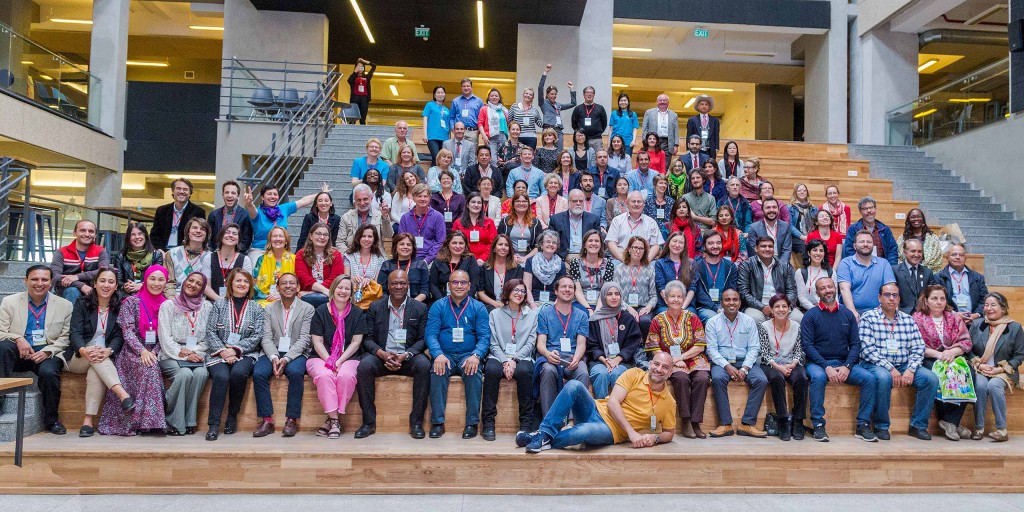
July brought to a close the third and final year of the Andrew W. Mellon Foundation’s $800,000 2015-2018 grant to the American University of Paris on behalf of AMICAL: “Promoting AMICAL Library Leadership, Faculty Collaboration and Digital Initiatives to Strengthen Liberal Arts Abroad.” AMICAL’s Administration, its committees and its members have been hard at work this past year, advancing the goals in that grant, and pushing forward other projects that raise the quality of library, technology and curricular resources across our member institutions.
In this first news item for the new academic year, I’d like to highlight some of your accomplishments, as a consortium, over the past year. We’ll be sharing news about the upcoming year shortly, but I think it’s important to look at past successes as we think about how to direct our energies as a group going forward. Here’s what I’d like to highlight in particular:
Consortial discounts on library resources
AMICAL cohort to the Digital Humanities Summer Institute (DHSI)
Onsite event: Teaching and Learning Innovation Exchange (TALIX)
Online events: info lit, digital pedagogy and digital humanities
Small Grants
AMICAL 2018: Our annual Conference
Recognizing exceptional consortial work: Elisabetta Morani
New member institutions
Increasing self-sustainability
Looking forward: 2018-2021
I mention below some of the colleagues who have been moving these initiatives, but there are many I didn’t have space to list. Thanks to all members who have been participating in these initiatives, since their value comes from the interest and direction you give them.
Consortial discounts on library resources
Elisabetta Morani (John Cabot University) and other members of AMICAL’s E-Resources Committee worked this past year to expand the number and value of AMICAL’s discounts on databases and other licensed resources. According to figures gathered for 2017, members benefited last year from an average of $13,000/institution in total discounts through AMICAL, with a maximum of $72,000/institution.
Our E-Resources Committee has also been leading initiatives for member libraries to experiment with new models of access to scholarly resources. In addition to our ongoing pilot with JSTOR to provide demand-driven selection of ebooks, AMICAL members participated in Knowledge Unlatched’s successful 2017 drive to turn 300 HSS academic titles and 15 journals into open access titles.
AMICAL continues to work with OCLC as well to bring latest-generation, cooperative library systems to members at discounted prices.
AMICAL cohort to the Digital Humanities Summer Institute (DHSI)
AMICAL launched this year an initiative intended to strengthen members’ collective ability to engage in digital humanities teaching and scholarship. The AMICAL cohort gathered institution-based teams and coordinated their participation in the June 2018 Digital Humanities Summer Institute at the University of Victoria. The cohort included 21 faculty, librarians, instructional technologists and deans with local curriculum-related DH projects at the following institutions:
American College of Greece
American College of Thessaloniki
American University of Beirut
American University in Cairo
American University of Central Asia
American University of Paris
AMICAL arranged expert consultation and peer feedback for the cohort, helping them prepare for effective participation at DHSI. Two webinars were organized, on mapping in the digital liberal arts and on digital project-course integration, with presentations (open to all members) followed by small-group consultations (just for the DHSI cohort). An online group space was created for the cohort on AMICAL Connect, where cohort members shared their projects and challenges they’re facing with them.
AMICAL provided most of the cohort’s essential funding to attend this 2-week event, recognized throughout the DH community as one of the best sources for learning about DH at any level. As a DHSI partner organization, AMICAL was able to secure discounted rates for all member participants.
At the event, cohort members participated in 1-2 weeks of intensive workshops on a range of both theoretical and practical topics related to their projects. At several points they met face to face as a cohort as well, the last of which included a a well-received workshop by Hoda Mostafa (American University in Cairo) on design thinking in the context of the cohort’s digital projects. As they left Victoria, the cohort was asked to revise their project plans in light of DHSI and their cohort participation, using a digital project plan template developed by Alex Armstrong (AMICAL).
As part of our follow-up planning, we ran a survey of all AMICAL members to gather suggestions for future DH training needs, and we’re currently using that in planning upcoming webinars and other events. After DHSI, the cohort will now form part of the core of a growing community of AMICAL colleagues interested in innovative digital approaches to humanities teaching and research. More on all of this in a coming newsletter!
Many thanks to Alex, and to Najla Jarkas (American University of Beirut), for their leading roles in organizing the DHSI cohort initiative
Onsite event: Teaching and Learning Innovation Exchange (TALIX)
In February, the American University in Cairo (AUC) hosted the first edition of TALIX, the Teaching and Learning Innovation Exchange for AMICAL members, as part of its own anniversary event marking 15 years of its Center for Learning and Teaching (CLT). The primary goal of TALIX was to connect AMICAL colleagues and help them grow ideas for projects related to innovation in teaching and learning. The event brought together 21 visiting AMICAL colleagues and dozens of AUC colleagues, including faculty developers, disciplinary faculty, instructional technologists and librarians.
One goal was to inspire and assist members’ work on the development of centers for teaching and learning. AUC’s successful Center for Learning & Teaching provided an onsite source of expertise and consultation during the event. The event also led to the creation of a vibrant interest group of faculty development center coordinators across AMICAL, and colleagues are already benefiting there from discussion, feedback on plans, and ideas for future collaboration.
A number of other collaborative projects were proposed at TALIX, including an inventory of institutional statements & human resources supporting digital literacies at AMICAL institutions, currently under development.
Special thanks to Hoda Mostafa (now Director at AUC’s CLT), Maha Bali and Nadine Aboulmagd, who played leading roles in organizing TALIX, and to Aziza Ellozy (Founding Director of CLT). In addition to showcasing AUC’s CLT for colleagues at TALIX, Aziza has generously shared with AMICAL members on many other occasions her experience, wisdom and irrepressible enthusiasm for improving students’ learning experiences. We wish her luck in her new role as AUC’s Associate Provost for Transformative Learning and Teaching.
Online events: info lit, digital pedagogy and digital humanities
AMICAL organized 13 scheduled online events in the past year and supported many other informal online member meetings. The events were largely organized by member groups, and among the most active of those were AMICAL’s information literacy librarians.
Highlights of AMICAL’s information literacy initiatives include:
Virtual Forum online discussions of recent information literacy topics, and follow-up meetings with librarian and faculty participants from the 2017 Co-Design information literacy workshop (coordinated by Michael Stoepel of the American University of Paris)
Information Literacy Journal Club events: online, real-time events encouraging librarians to read the current professional literature and discuss its implications for their work at AMICAL institutions (coordinated by Kathryn Vanderboll and Vanessa Lawrence, both of American University in Cairo)
Other member groups have organized events on current topics in digital pedagogy, digital literacies and digital humanities, with recent topics including:
Backward design for digital project-course integration
The intersections of digital pedagogy and information literacy
Strategies for teaching about fake news
Mapping in the digital liberal arts
Faculty outreach for information literacy librarians
E-portfolios
Small Grants
Recognizing that we needed to give more attention to the planning, monitoring and support of our Small Grants-funded projects, we revised our Small Grant guidelines last year in ways that strengthen applicants’ commitments to clear timelines and reporting of milestones, ensure that the necessary expertise for projects’ success is in place or being developed, and make staff exchanges more effective by establishing clearer host-institution support and planning for activities and outcomes.
Our Small Grants program awards up to €4,000 for professional development, staff exchanges and local projects that relate to AMICAL’s mission. We awarded 18 grants in support of:
12 professional development opportunities
5 local projects
1 staff exchange between AMICAL members
Highlights of last year’s grants include our support for:
The attendance of a cohort of six librarians from five institutions to ACRL’s Information Literacy Immersion Program.
The leadership development of mid-career librarians at three institutions (Harvard Leadership Institute for Academic Librarians; Online Certificate in Library Management; engaging a library organizational change consultant).
Travel support to conferences where staff had been accepted as speakers.
A team from American University of Central Asia to Open Education Global Conference, to support their institutional shift to using OER.
Projects involving the collection, transcription/description and analysis of oral histories or narratives at three member institutions (American College of Thessaloniki, American University in Cairo, American University of Central Asia).
One Small Grant funded the participation of Rayane Fayed and Rana Al Ghazzi in an EDUCAUSE workshop on developing mentoring programs for technology professionals. Rayane and Rana then developed a proposal for a more general mentoring program for AMICAL members; this year we’ll be drawing on their work and consulting with them as we make plans for supporting mentoring across our consortium.
All Small Grant applications were reviewed by AMICAL’s Grant Review Committee, whose members are the officers of our Coordinating Committee. In addition to myself (Jeff Gima, American University of Paris), this includes:
Nikolina Ivanova-Bell (American University in Bulgaria)
Evi Tramantza (American College of Thessaloniki)
Fatme Charafeddine (American University of Beirut)
Maha Bali (American University in Cairo)
This group reviewed, discussed, and responded to dozens of applications over the past year. They work with criteria that they helped develop, and that are a bit complex, but intended to ensure equitable support and fruitful outcomes. It’s time consuming, but I think their efforts have contributed to the increasing value and impact of the outcomes of our Small Grants program.
AMICAL 2018: Our annual Conference
In May, the American University of Central Asia (AUCA) hosted our most recent AMICAL Conference. The AMICAL Conference brings together staff and faculty who are passionate about improving the learning experience of their students through innovative and effective use of libraries, information and technology. This year there were over 100 attendees from 24 member institutions, including:
47% from libraries & archives
34% faculty or faculty developers
14% instructional designers/technologists or IT managers/staff
5% administrators & other roles
The conference theme was “International liberal arts in a digital era: reimagining a shared vision for libraries, technology and learning.” The program was built from member proposals and addressed topics such as:
Information & digital literacies
Rethinking teaching and learning
Reimagining libraries
Strategic use and development of technology in higher ed
Professional/leadership development in higher ed
Growing the AMICAL collaboration network
The event blended the host institution’s strengths and character with expertise from both consortial and international colleagues. Here are some highlights:
Keynotes on digital literacies from Gina Siesing (CIO & Director of Libraries, Bryn Mawr College) and John Traxler (Professor of Digital Learning, University of Wolverhampton), and follow-up sessions with the speakers
A 1.5 day member-led workshop on low-barrier open source tools for digital humanities pedagogy and scholarship
Member-led workshops on: Resource sharing in the digital age; Research data management; Frameworks for building teaching expertise; Creating narrative non-fiction podcasts in the classroom
Panels on: Librarian-faculty collaborations using the ACRL information literacy framework in course design; Learning space design projects at AMICAL institutions
35 Community Idea Exchange presentations presented over 3 sessions, sharing local innovations, lessons learned from challenges and pilot projects, and ideas proposed for future consortial collaborations
Local culture infused the event in myriad, memorable ways, from Henry Myerberg’s sources of inspiration for AUCA’s architecture, to AUCA students’ talent showcase, to the lunchtime yurt-building demonstration with a Kyrgyz storyteller performing the Epic of Manas.
AMICAL 2018 will not be soon forgotten, thanks in particular to lead AUCA organizers Anguelina Popova and Ekaterina Kombarova. The event was remarkable for our invited speakers (see Gina Siesing’s blog post about it) as well as for attendees, one of whom noted this:
“The demographic of institutions and representatives is unlike anything I have seen at a conference before. This rich blend of disciplines and cultural contexts generated some fantastic, if sometimes difficult, conversations. The interdisciplinary character of the conference and sessions led to me coming away from this conference with more ideas and plans for the immediate future than any other conference or workshop I have ever attended.”
Recognizing exceptional consortial work: Elisabetta Morani
At our recent conference, AMICAL’s Coordinating Committee officers bestowed the consortium’s first Award for Outstanding Volunteer Service to Elisabetta Morani (JCU) for exceptional and sustained efforts she has made in support of consortial goals. She was recognized in particular for her foundational work as Chair of the E-Resources Committee, and her longstanding commitment to building a consortium that combines innovation with responsiveness to members’ current needs. Brava Elisabetta!
New member institutions
I’m pleased to announce two new institutions that were approved as members by AMICAL’s Coordinating Committee this Spring: Effat University (Affiliate Member) and Habib University (Network Member). This brings us to 29 member institutions, representing 22 different countries! It was a pleasure to have colleagues from Effat and Habib with us at AMICAL 201, and we’re looking forward to their participation in future events and initiatives.
Increasing self-sustainability
Though AMICAL has benefited from critical support from the Mellon Foundation, it’s important to note that last year member institutions raised their own financial contributions to AMICAL’s operating costs to a total of €45,000. With this financial participation, our institutions help sustain consortial programs valued by members. They also demonstrate, importantly, institutions’ commitment to the grant’s goals, institutions’ recognition of the value of AMICAL membership, and institutions’ confidence in the future value of our collaborative efforts.
Plans for 2018-2021
We announced last January a new $1.1 million, 3-year grant to AU Paris for “Building Leadership and Capacity for Digital Liberal Arts across AMICAL”, and we’re excited to be embarking on this and other projects this fall. The linked blog post provides an overview of the new grant, and in the next few weeks we’ll be sharing more news and plans for the current year. Join our community to make sure you get the news!
Gina Siesing ·
21 June 2018
I am not the same: Reflections on AMICAL 2018
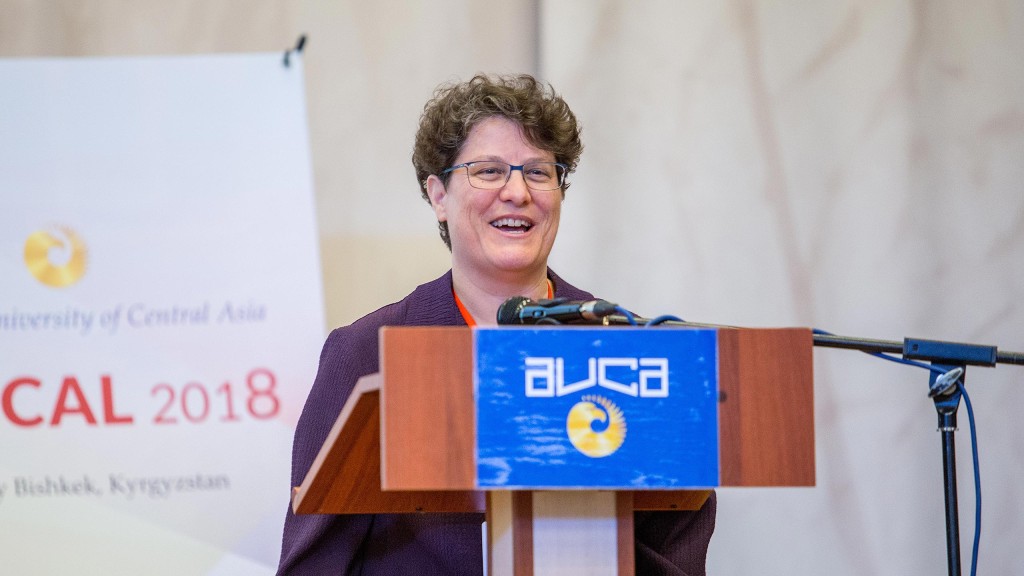
It might sound trite to declare it, but it’s absolutely true that my world has expanded through participating in AMICAL 2018. Kyrgyzstan and all the places between Philadelphia and Bishkek are now on my enhanced mental map, and I’m now happily aware of this phenomenal network of international liberal arts colleges across Africa, Asia, Europe, and the Middle East. What a gift to join this generous, creative, welcoming community of “amicos” for days of exploration – of digital literacy models, of continuous evolution for liberal arts curricula and learning spaces, and of the Land of Forty Tribes and its history, culture, and terrain.
Angie Popova, the organizing committee, and all of the people who helped to host us at the American University of Central Asia were thoughtful about every aspect of our visit, from ensuring smooth transportation and comfortable lodging for us to introducing us to the arts and traditions of Kyrgyzstan to setting up tours and trekking opportunities to offering hospitality at every turn.
The campus building at AUCA sits elegantly facing and mirroring the Ala-Too mountain range. The interior space is elegantly designed to bring the community into connection and to accommodate the full spectrum of curricular and co-curricular activities for the institution. Art infuses the building – from the multi-lingual mural in the area where we met each day for refreshment breaks, to the ropes reminiscent of yurt straps that criss-cross the stairwell to the sculpture representing traditional Kyrgyz shoes out front, to the string art representing the building itself in the conference room, to the exhibit on chewing gum that transformed a typical blight of any school into creative output. Henry Myerberg, architect of AUCA and also of Bryn Mawr College’s Carpenter Library, was on the program and with us for the conference, and it was a joy to meet him in Central Asia.
The conference days at AMICAL were well-designed to allow for robust sharing of ideas and information, active learning and reflection, and even connection with colleagues around the world who were interested in highlights from the meeting, but unable to attend in person. This commitment to Virtually Connecting was an impressive element of the conference, facilitated on site by Nadine Aboulmagd. The days and evenings were also infused with fantastic experiences unique to Kyrgyzstan, including the construction of the yurt in the campus courtyard, the chance to hear a manashi perform a portion of the Epic of Manas, the Kyrgyz and Russian dancing and singing at the Ethno-Complex Supara, the Osh Bazaar and the Museum of Fine Arts tour, and so much more packed into the visit.
I loved the Birds of a Feather sessions, including the one on monuments and graffiti across international contexts convened by Evelina Kelbecheva, after which we spontaneously decided to make a trip to the Ata-Beyit Memorial Complex in Chong-Tash, organized in agile form for us by Angie. This was a special experience in that we had the opportunity to learn about several layers of Kyrgyz history from 1916 to 1938 to 2010, and we also enjoyed a gorgeous afternoon in the sunshine, soaking in this moving set of memorials and also seeing new parts of the world from new perspectives. As we drove out to Ata-Beyit, we stumbled across a buzkashi match in progress and piled out of the van to see this sport we had read about in Khaled Hosseini’s The Kite Runner. A fierce player on horseback galloped over to us in intimidating fashion, and we understood through Angie’s translation that we were not, as we feared, encroaching on their cultural practice, but rather watching from the wrong side of the pitch since the paying tourists were sitting on the other side. We retreated to our van, but not before seeing the players score a goal by placing the sheep’s body on a circular clay or concrete platform with tires around the circumference.
The day trip to Burana Tower and the Kegety Gorge was a perfect way to spend a final day in Kyrgyzstan with wonderful new colleagues and friends, among the burial markers with enchanting character and the mountains that are home to horses and snow leopards, wildflowers and waterfalls.
I’m deeply grateful to Jeff Gima and Alex Armstrong and the AMICAL 2018 program committee for inviting me to this year’s conference and very happy to have connected with this community, where the conversations went deep, and the joy in sharing common goals and interests among a group with richly diverse backgrounds was completely inspiring.
And this was the perfect sign that greeted me when I landed at the airport back in Washington, DC….
Jeff Gima ·
3 June 2018
Connect with AMICAL at DHSI 2018
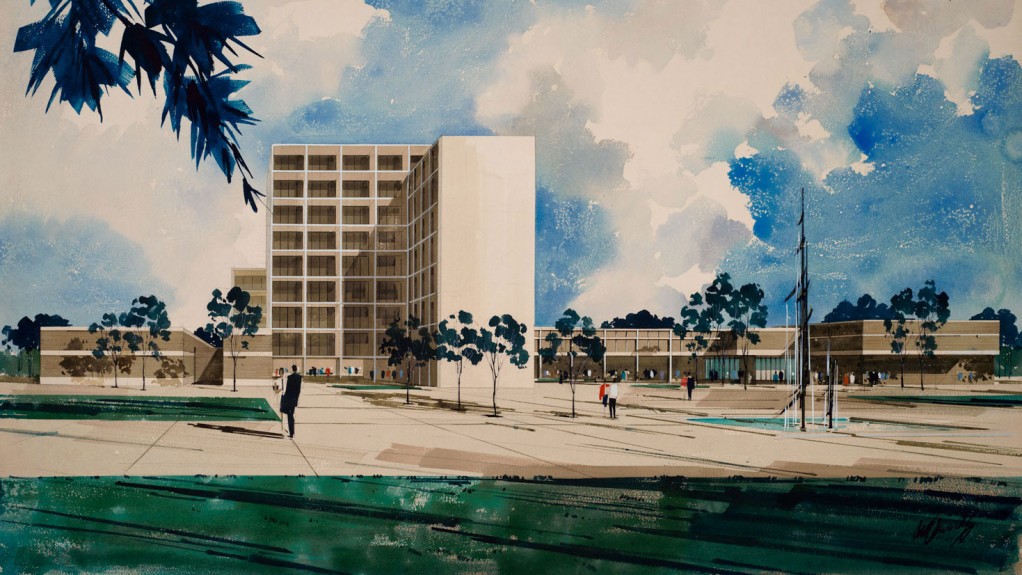
Attending the Digital Humanities Summer Institute this month? The AMICAL Consortium will be there too, and we may be interested in talking with you as a potential partner for our future initiatives related to the digital humanities.
We’re looking for colleagues who might be interested in partnering with us in the context of a 3-year grant that we recently received from the Andrew W. Mellon Foundation. The grant aims to use digital scholarship and pedagogy as a focal point for bringing librarians, faculty and technologists to work together on their shared teaching and learning missions. In particular, we plan to:
Raise faculty and staff capacities for localized digital liberal arts education
Identify and plan sustainable consortial models for supporting the digital liberal arts
We’re looking in particular for colleagues interested in the following roles:
A 2-year position as AMICAL’s Mellon Digital Liberal Arts Fellow, helping to develop our programs and provide training and consultation
Occasional instructors for online or face-to-face training events related to the digital liberal arts, digital humanities, digital pedagogy, etc.
The fellowship in particular is a key part of our capacity-building programs for digital liberal arts, helping to guide four specific activities:
Consulting visits by the fellow to member institutions
Consortial support and virtual collaboration structures for the digital liberal arts
Coordinated participation by AMICAL cohorts in digital humanities summer schools
Course-integrated digital collaborations
Get in touch with AMICAL’s leadership if you’re interested in discussing any of the partnership roles described above. We’ll be available to meet at DHSI until the afternoon of June 10 and online thereafter.
In addition to the consortium leadership, there’s a good chance that you’ll run into members of our AMICAL cohort to DHSI. The AMICAL cohort brings to DHSI institution-based teams of faculty, deans, librarians and technologists, all working together on digital humanities projects at their campuses:
American College of Greece
American College of Thessaloniki
American University of Beirut
American University of Cairo
American University of Central Asia
American University of Paris
American University of Sharjah
If you have a chance to meet some of them, they can give you an idea of a few of AMICAL’s diverse institutional environments.
Looking forward to meeting some potential new partners over the next few weeks!
Alex Armstrong ·
4 May 2018
Participate in AMICAL 2018 online
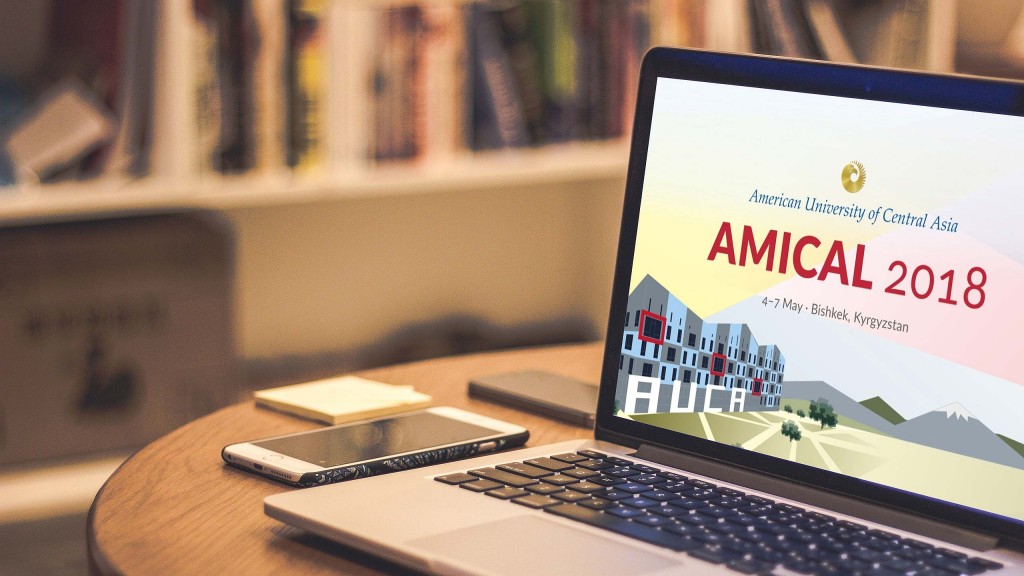
Attendees have begun gathering in Bishkek for AMICAL 2018, the Consortium’s 15th Conference, hosted by the American University of Central Asia (AUCA).
The Program Committee has assembled a terrific program tied to the theme of “International liberal arts in a digital era: Reimagining a shared vision for libraries, technology and learning.”
But what if you aren’t able to attend the event? Not to worry! You can join us online:
Watch the live stream of the keynotes and panelsParticipate in an online discussion with the Conference keynotes.
The keynote speakers
This year we are pleased to have two exceptional speakers keynoting our event on different aspects of digital literacies:
Gina Siesing, Chief Information Officer & Constance A. Jones Director of Libraries at Bryn Mawr College, will deliver a keynote that grapples with this question: “How do we ensure that students at our liberal arts institutions are prepared to be effective in their chosen fields of pursuit both immediately after graduation and throughout their lives and careers?”Students at the center, all of us in support: Digital competencies at scale in the liberal arts (6 May 2018)
John Traxler, Professor of Digital Learning at the University of Wolverhampton, in his keynote will deconstruct the simplistic assumption that digital litercacy is “easy and obvious, almost a universal human right in a digital world. It should be the educational concept that underpins learning, prosperity and fulfilment.”Digital literacy… is it critical? (5 May 2018)
Both Gina & John will participate in a hybrid (of course!) discussion on digital literacies (6 May 2018). This Virtually Connecting session will be co-facilitated by Nadine Aboulmagd, Instructional Designer & Technologist, and Maha Bali, Associate Professor of Practice, both from AUC. To join this session, leave a comment on the Virtual Connecting event blog post or tweet to @vconnecting.
The panels
We also have two panels that will be live streamed.
New learning spaces: Transforming the way we teach, learn and research (5 May 2018). Members from four AMICAL institutions, and the architect behind the award-winning AUCA building will provide ideas on further design/redesign/transformation and evaluation of learning spaces.
Beyond Co-design! Next steps for ACRL Framework collaboration (6 May 2018). Moderated by librarian, this faculty panel will discuss the impact of the Co-Design information literacy workshop and how to sustain and institutionalize emerging practices.
Tweet along
We’ll be tweeting with the #amicalconf hashtag. Follow along and join the conversation!
See you all online!
8 February 2018
Small Grants – January 2018 update

Responses were recently sent out for the latest group of applications for AMICAL’s Small Grant Program.
Of the 7 applications received, 1 was ineligible, and the rest were reviewed by the Grant Review Committee. 2 applications were declined, revisions were requested of 3 applications, and 1 application was accepted:
Title
Applicant
Institution
Category
Facilitating Access to Egyptian and AUC Heritage Oral Histories Through Transcribing and Description
Stephen Urgola
American University in Cairo
Project
Next deadline for applications
The next round of applications will close at midnight on 4 March. Applicants must be from Full or Affiliate member institutions.
Find out more
Full information, including the criteria we use in evaluating applications, can be found in our Small Grants guidelines.
Jeff Gima ·
29 January 2018
Mellon Foundation grants $1.1M for international digital liberal arts across the AMICAL Consortium

We’re proud to share this news just released from The American University of Paris, the founder and host of the AMICAL Consortium:
Mellon Foundation grants 1.1 Million USD to The American University of Paris for International Digital Liberal Arts across the AMICAL Consortium
PARIS, France – January 26, 2018 — The Andrew W. Mellon Foundation awarded a 1.1 million USD, three-year grant to The American University of Paris (AUP) for “Building Leadership and Capacity for Digital Liberal Arts across AMICAL.” Founded and hosted by AUP, AMICAL is a consortium of 27 American-style liberal arts institutions in 21 countries across Europe, Central and Southern Asia, the Middle East and Africa. The grant uses digital scholarship and pedagogy as a focal point for bringing librarians, faculty and technologists to work together on their shared teaching and learning missions.
Grant goals
The grant will support the following goals across the AMICAL Consortium’s member institutions:
Strengthening library and technology leadership – Promoting innovative and effective leadership among librarians and technologists, in light of their changing and collaborative roles within evolving liberal arts institutions.
Advancing programs for information and digital literacies – Helping students develop effective skills and critical dispositions in their use and creation of information in a digital environment.
Developing localized and collaborative forms of digital liberal arts – Helping learners and scholars combine digital methods with humanistic inquiry, anchored with the resources or geo-cultural contexts of AMICAL institutions.
Grant-funded actions
To achieve these goals, grant funds will be used to enable the following programs and resources for librarians, technologists and faculty:
Virtual collaboration environmentThe grant will help AMICAL improve its online forum and peer profiles, while developing tools for project-partnering and shared hosting of members’ digital projects. The grant will also support strategic types of intra-consortium relationships through a mentoring framework, campus liaison programs for digital liberal arts and other initiatives.
Annual AMICAL ConferenceAMICAL will expand its member-driven annual conference – an event that combines professional development, networking and work on collaborative projects.
Strategic professional development AMICAL will organize multi-institution events and fund individual professional development opportunities, aligned with the consortial goals mentioned above.
Small grants for projects Members will be able to apply for funding for projects that relate to AMICAL’s mission or the goals listed above. Special priority will be given to projects that help develop localized and collaborative forms of the digital liberal arts.
Capacity-building programs for the digital liberal arts
The grant will fund a fellowship for digital scholarship and pedagogy to help guide four consortial initiatives:
Consulting visits by the fellow to member institutions
Consortial support and virtual collaboration structures for the digital liberal arts
Coordinated participation by AMICAL cohorts in digital humanities summer schools
Course integrated digital collaborations
Building bridges and collaborative capacity
Members of the AMICAL Consortium tend to be locally isolated because of their American-style approach to higher education in globally dispersed locations. This grant will help AMICAL continue to build bridges between them and collaborative capacity among them.
Celeste Schenck, President of The American University of Paris, attests:
“The community of administrators, faculty, librarians, and technologists within the AMICAL Consortium has strengthened with every year since its founding and has had remarkable impact on each of the members. Jeff Gima’s leadership on behalf of both AUP as the founding institution and AMICAL itself has been an essential driver of this multinational, multilingual experiment in sharing Anglophone resources across Europe, North Africa, the Middle East and Central Asia.”
Jeff Gima, AMICAL Consortium Director, explains some of the opportunities represented by the grant:
“Faculty and learning tech staff interested in experimenting collaboratively with digital projects will see some exciting opportunities in this grant. But librarians even more so. They’re uniquely able to make connections between digital projects, which tend to be idiosyncratic and ephemeral, and the library’s longstanding roles – like information organization and access, curating local scholarly production and cultivating information literacy. The grant will help librarians lead that side of the digital liberal arts.”
In combining the information expertise of librarians and technologists with the diverse local resources of students, faculty and their environments, this grant will help member institutions to explore their unique opportunities for developing liberal arts education that is both international and digital.
About The American University of ParisChartered in Paris as an American-style liberal arts college in 1962, The American University of Paris is today an international university located at the meeting point of France, Europe, and the world. The University provides a curriculum that combines liberal arts inquiry, preparation for professional life, and student-centered, active learning in small classrooms of students from many nationalities. A global faculty teach 27 undergraduate majors and four core fields of graduate study, all taught in English. AUP’s 20,000 alumni live and work in 145 countries.
For information about The American University of Paris, visit the AUP website (www.aup.edu). To find out more about the AMICAL Consortium and this grant, see the consortium’s website (www.amicalnet.org) or follow them on Twitter (@amicalnet).
PDFs of this news release and an abbreviated version are available from the original news posted by The American University of Paris.
9 January 2018
Important January 2018 dates for major AMICAL programs and initiatives

There’s a lot going on with AMICAL this month! To help you keep track of deadlines and other key dates in January, we’ve compiled this list:
Date
Program / initiative
Activity / milestone
10 January
ACRL-AMICAL project documenting “Library partnerships in international liberal arts education”
Q&A session 1(Meeting details in AMICAL Connect)
16 January
Workshop Grants for AMICAL 2018 extended (pre-conference) workshops
Deadline for proposals by committee chairs
21 January
Small Grants
Deadline for applications (current round)
23 January
ACRL-AMICAL project documenting “Library partnerships in international liberal arts education”
Q&A session 2(Meeting details in AMICAL Connect)
31 January
ACRL-AMICAL project documenting “Library partnerships in international liberal arts education”
Deadline for proposals
31 January
AMICAL 2018 - Call for Proposals
Deadline for proposals
Note:
The dates above are subject to change. Any date changes will be noted in the Announcements on AMICAL Connect and updated here.
Some AMICAL activities that are being planned for January may not be included here but will be announced to their target audiences and/or on AMICAL Connect once finalized.
15 December 2017
Small Grants – December 2017 update
Responses were recently sent out for the latest group of applications for AMICAL’s Small Grant Program.
Of the 5 applications received, the Grant Review Committee accepted the following 4:
Title
Applicant
Institution
Category
Skills for information literacy teaching and curriculum design
Rania Azad
American University of Iraq, Sulaimani
Staff exchange & peer training
Participation of AUCA team at Open Education Global 2018 Conference
Zhanylai Keldibekova
American University of Central Asia
Professional development
Certificate in Library Management
Clélie Riat
Franklin University Switzerland
Professional development
Incorporating Nearpod in undergraduate accounting classes in Egypt (present at conference)
Caroline Mitry
American University in Cairo
Professional development
Next deadline for applications
The next round of applications will close at midnight on 21 January. Applicants must be from Full or Affiliate member institutions.
Find out more
Full information, including the criteria we use in evaluating applications, can be found in our Small Grants guidelines.