
Blog
News & commentary on AMICAL’s projects and activities
Laurie Allen ·
11 July 2016
Reflecting on AMICAL 2016

My experience at AMICAL was overwhelmingly fantastic, and fantastically overwhelming.
I have tried many times to reflect with some clarity about the many strands of learning that were going on for me at AMICAL. And I still feel like there’s too much for me to really follow any one of them into a coherent piece of writing. So instead of full thoughts on the whole experience, I’ll sketch a few threads:
My presentation / What did I have to offer
I was so flattered for the opportunity to lead a workshop on planning for a digital scholarship program at a Liberal Arts College. In my talk and workshop, I shared the program that we built at Haverford College, where I worked until February of this year, and talked about its development. Roughly the program has three parts: engagements with courses in producing new forms of scholarship; student and library-driven projects, especially in the creation of digital and hybrid exhibits; and faculty-driven longstanding research projects.
It wasn’t until talking with the AMICAL folks, though, that I think I really fully recognized the key to our success. It was the student workers we relied on and trusted that allowed us to do the work we did. I really wished I’d re-done the workshop to focus explicitly on all of the things I learned about managing student workers over time. What we did focus on was pretty straightforward planning practices: build from where you are, use the resources at your disposal, start small and build outwards. But the more I talked with folks, the more I came to realize how much of our growth was in developing strategies, approaches and workflows for working with student workers on complex and substantive projects.
Does Ed Tech have an ethos?
Maha Bali and Jim Groom led one of the most open and brave conference sessions I’ve ever been to. It was a conversation, it was tough, it was welcoming, and I was really impressed, in addition to truly enjoying it. Maha and Jim did a great job writing it up already, so I won’t say more than that. But the opportunity for real conversation across ways of working and thinking is so rare. And they moderated an important, difficult, and fun conversation about the question of neutrality in our work. For me, most of tensions they brought up were not new, but I really admired how their approach was so open, and so generous in acknowledging the complex and layered day to day work of educational technologies as well as the simultaneous context that it is part of. I think I (and likely the #critlib movement) could learn some humility and openness from their approach.
The Archives session
There were a lot of sessions that resonated for me, and even more conversations, lunches and relaxed opportunities to hang out. But one session I wanted to call out in particular out was the session on Archives that Demetra Papaconstantinou led. I was a librarian for 12 years before my work turned entirely towards the digital. It was only when I started working fulltime in the creation of new scholarship using technology that I really appreciated the importance of archives, and of the work of archivists.
There is a range of archival activity across the AMICAL schools, but honestly, I have to say that I wish there were more. That’s not a critique of the activities of AMICAL librarians, more a reflection on the absurdly large job responsibilities of so many librarians. The are expected to simultaneously support research and pedagogy across all academic disciplines and serve faculty interests so that they’re conserving resources for what will be most used for the current faculty. And yet, this focus leaves so little room for the work of maintaining and documenting the history and records of these institutions. I felt some sadness at the loss of these amazing institutional histories. It’s nobody’s fault, but it was hard to hear about, and I couldn’t help mourn for the loss to us all from the inattention to the stories that these institutional records might tell. Once again, I want to find ways to create networks of support across borders. It seems like a tough task, one I hope to continue working on.
Networks and distance
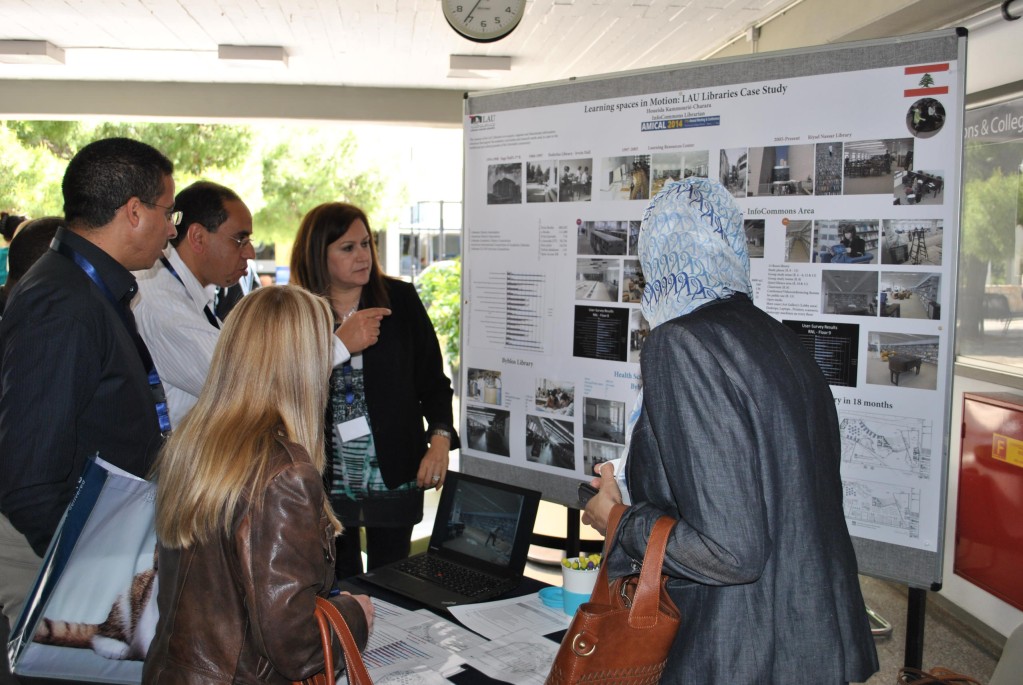
Spending time seeing the amazing work going on at AMICAL institutions through the Community Idea Exchange was fantastic. There are so many creative, thoughtful projects going on. It did make me feel really grateful for the THATCamps, conferences, and local meetings I go to, where I’m exposed to a variety of cool and useful projects. That session, combined with so many others, left me really hungry for ways that US and international librarians could find easier ways of sharing our experiences and learning together.
For all of my amazement at the cool stuff there, I was frustrated that my colleagues in the US don’t have the benefit of learning from AMICAL schools more often, and that the staff of these AMICAL institutions don’t have more easy contact with all of the networks that have benefited me so much in my work. I’m very interested in ways that we might create more opportunities for networking across borders, time, and distance. I love the work going on through Virtually Connecting and the GO::DH crew, and will try to incorporate their practices into some of my future work. But I also want to look for other ways of connecting with my international colleagues in the digital world.
Maha Bali ·
17 June 2016
Does EdTech have an ethos? And why should I care?

One of the things that is oft-repeated in our line of work is “it’s not about the technology,” or “it’s not about the tool!”
While it sounds good as a slogan, it is actually a pretty ridiculous statement in this day and age. In fact, it is almost dangerous because it suggests that we can somehow separate the way we teach and learn from the technological systems in which we work. It seems disingenuous to say “it’s not about the tool” if you are using a Learning Management System (LMS, such as Blackboard, Moodle, Canvas) to teach a course. It would be like saying the utensils you use to cook are irrelevant to the food you produce - when we all know the difference a pot or oven can make, regardless of content.
We have both been in the line of work of supporting other faculty in their teaching and use of technology (Maha since 2003, Jim since 2004) and even though our contexts are very different, we have been interacting online for over two years now and take a critical stance (not a value-neutral one) about the relationship between technology and pedagogy. In our session entitled “Should EdTech have an ethos?” we tried to highlight the assumptions particular tools make about the teaching and learning experience.
For example, what assumptions does your average LMS make about a course experience? Although LMS’s differ slightly in their implementation, for the most part, they are true to their name: they attempt to “manage” learning in a “systematic” way - what does that say about how the LMS approaches learning, which we as educators know is messy and should be nurtured rather than managed? The LMS delivers on its name: It is a closed, copyright haven that makes giving quizzes and grading easier. How does that measure up in terms of ethos? It reinforces higher ed’s refusal to push back on draconian copyright laws, their intransigent fear of openly sharing, and the continued quest for efficiency around the management tasks of teaching. All of this can make sense in some contexts, but as an ethos for a rich, web-based teaching and learning experience it tends to fall short. Now you can certainly do more with such a tool, but few do—-and the tool itself is designed to reinforce the behaviors we have come to expect of the tool (there has been almost two decades of fine-tuning the LMS, so in that regard the tool is a reflection of our desires and priorities). We asked who makes decisions about which tools a university purchases. Should faculty (and even students) have a greater say in which tools the university chooses instead of constantly finding themselves as consumers of those forced upon them by the institution? Should faculty or students feel shamed for not using technology provided by the institution if they feel uncomfortable with it?
The tool is not besides the point, it is that much more important as an object of study. The tool has become the manifestation of our ethos, and hence the more we deconstruct the assumptions of our tools, the closer we come to laying bare the ethos we currently champion around our teaching and learning technologies.
In this regard the discussion around the LMS (as well as Turnitin, Google Apps for Education, etc.) at AMICAL was tricky because while some haven’t fully deconstructed the tools, most use them even though they fully (or at least partially, or even subconsciously) understand the limitations. And given this, once you articulate a critique of the tool it also becomes a critique of their teaching and learning practices. If you know something is subpar, why do you continue on with it especially given how important it is to the overall experience? This inability to separate the tool from the teaching and learning is demonstrative of how interdependent the two have become, and how problematic the idea is that teaching and learning in 2016 isn’t to some great degree informed by technologies we use.
The approach of this session was to directly challenge the ways many of our “teaching and learning” tools enable us to prioritize class management over engagement, hide from important copyright discussions, and assume our students are plagiarists and cheats. And while a difficult and at times agonistic session, we believe it was a really worthwhile conversation to have (and continue having). Tensions ran a bit high at certain points and individuals felt their practices were being challenged, but we think the discomfort resulting from a direct questioning of the assumptions around our everyday practices is why we got into the game of higher education. What’s more, such a discussion reinforces the importance of being able to articulate how and why the tools we use increasingly define our practices.We need to ensure that teachers have agency over how and why they integrate technology into their teaching, rather than give them tools the institution has pre-chosen and paid for, and tell them to limit their arsenal to those, to submit to management and systems instead of learning and engagement.
We had a rich, animated discussion, which Maha has always wanted to have on campus but did not have the courage to facilitate on her own (thanks Jim!). But the discussion need not end there - it is one thing to become more conscious of the conflicts between our philosophies and the ethos of our tools, and another to be able to take action based on this. We hope that AMICAL members will continue to ask these questions and support each other locally and consortially, in moving forward.
Follow up
At the Digital Pedagogy Committee meeting following our session, all committee members (all had attended this session) wanted to continue this type of conversation across AMICAL, online synchronously and asynchronously over time.
As posted on AMICAL Connect, the Digital Pedagogy Committee have suggested a preliminary list of possible webinars/activities we can offer and we invite members to express interest at: http://bit.ly/digped2016
(The one that is a follow-up to the Ethos session is “Finding the mix of tools to support your teaching philosophy”.)
We will prioritize the webinars/activities that seem to be of most interest to AMICAL members. There is also room for anyone to suggest their own - if they have expertise in an area and are willing to support other AMICAL members in learning about it.
Titia van der Werf ·
31 May 2016
A story about the spirituality of libraries

At the AMICAL 2016 conference last month, I heard an inspiring story about the cyclical destruction and revival of libraries. Dr. Richard Hodges, President of the American University of Rome, began his welcome message as follows: “Unlike what many of you may believe, you don’t come from Silicon Valley, you come from the monks”. He went on to explain that libraries were created at the end of the 8th century by monasteries. It was then that monks started to make books, besides growing food and brewing beer. They crafted the leather skin covers, the straps, the folded leaves of vellum, and all the instrumentation necessary to write books. They created the blueprint of the library. In subsequent years, full blown libraries developed, like the ones in Saint Denis and Montecassino. Like with all things successful, once they grow, you need to sustain them. The monks thus devised a model to attract donors with the lure of a counter gift: a hand-crafted book. When, in the mid-9th century, the Vikings and Saracens destroyed many monasteries and their libraries, the books survived in the hands of those who had been donors. And so, the spirituality of what libraries stood for, as preservers of intellectual heritage, survived the destruction and was the seed for the new learning of the Renaissance. The storyteller hinted at globalization as a similar wave of destruction, which might leave us without libraries but with the promise that the spirituality of what libraries stand for, will resurface in a new guise.
According to keynote speaker Jim Groom this new guise is the Archiving Movement. He painted the Web landscape as a wonderful space of many small initiatives with do-it-yourself blogs and a Wiki-infra on which one can build an entire curriculum for free, with fascinating open technology and with exciting new learning experiences. In his view, it is all about our individual content, building domains of our own and leaving our personal digital footprints. He advocated the need for individuals to become archivists, reclaiming ownership and control over their data from the “big companies”. In this world of the small against the giants, “rogue Internet archivists” (or morphing librarians, as you wish) are excavating and rescuing the remains of parts of the web, that are dying and being destroyed.
In my presentation on “Adapting to the new scholarly record” I talked about shifting trends in the research ecosystem and disturbances which are disrupting the tasks and responsibilities of librarians, as stewards of the record of science. I conveyed the concerns of experts and practitioners in the field, who met during a series of OCLC Research workshops on this matter. They talked about the short-term need for a demonstrable pay-off by universities and funding agencies; the diverse concerns on campus around image, IPR and compliance; the emergence of new digital platforms like ResearchGate and others, that lure researchers into providing data to them and bypassing their institutional repositories; etc. All these forces at play are distracting libraries from safeguarding the record for future scholarship. These observations beg the question, which came from the audience: “what can we do about it?” and in particular “What can we do, as AMICAL libraries”?
I had been impressed by the information literacy (IL) session the day before. AMICAL libraries from Paris to Sharjah presented their efforts to engage faculty and to broaden the understanding of IL within the university. Many of the libraries face challenges with their student population, such as reluctance and resistance to reading, deficiencies in academic writing skills, inexperienced information retrieval expectations and ineffective search practices. The session concluded with the desirability to integrate IL in the curriculum.
So, I answered my audience without hesitation: Please continue the good work you are doing in IL! Why do we hear so little about IL at other library conferences in Europe? Isn’t IL a core part of that spirituality Richard Hodges talked about – a core part of what libraries stand for? The next generation needs to be prepared for the new learning in the digital information age. This requires education and training. People are not born being-digital!
Jeff Gima ·
19 May 2016
The AMICAL 2016 program: the library, the digital, and the human

The following post is adapted from opening remarks given last week at AMICAL 2016, our consortium’s annual meeting and conference.
This year’s AMICAL Conference is the first time that we’ve tied the theme of the event directly to the Mellon Foundation grant that is supporting many of AMICAL’s programs. We built this year’s conference program under the theme “Libraries and digital initiatives”, aligning it with one of the strategic priority areas we established in our current Mellon grant: the collaborative work of librarians, technologists and faculty on curriculum-integrated digital initiatives.
Donald Waters, Senior Program Officer for Scholarly Communications at the Mellon Foundation writes in a recent blog post that the Foundation is trying to help “make the digital environment a natural place to do scholarship.”
For AMICAL, this event is a milestone in the three-year journey of our current grant, one step on our way toward making AMICAL a natural place for librarians, technologists and faculty to collaborate on digital pedagogy, on digital collections, and on digital scholarship.
I credit Alex Armstrong with encouraging us to think of the event more strategically than we have in the past and to shape it in a way that more actively supports our larger organizational goals. Alex has been working with AMICAL as our Web Developer & Digital Strategist since last year, and in addition to building the new website where we host this blog and other public info about AMICAL, he’s created a system of member profiles as well as an innovative discussion forum that are parts of a new online network for AMICAL members. But he’s also contributed in important ways to our planning for new committees that relate to digital initiatives.
And as you can see from the program, AMICAL’s standing committees, which help to guide our consortial programs in areas like professional development and digital pedagogy, were given a featured role in the event. Each committee had two chances to meet, and then, during our closing session, they led their “5+5” talks. Committees were given 5 minutes to share with us their plans for the coming year, and to invite, question, and inspire us around what they’re doing. And then the audience was given 5 minutes to react and question them.
Aside from committee work, there were presentations, workshops and discussions touching sometimes on digital collections, scholarship and pedagogy, but also spreading out in other directions of AMICAL’s work. The word cloud above was made from the titles and abstracts of our program sessions. With apologies to speaker Eric Lease Morgan and his abstract, and to our Birds-of-a-Feather discussions, this version of the word cloud excludes the words stone, soup, beef, and birds, all of which occurred with high frequency.
Between Eric, Laurie Allen and Jim Groom, our keynote speakers provided an interesting mix of library-anchored digital scholarship, human-anchored approaches to educational technology, and the very human aspects of good collaboration necessary for any of this role-bridging work to really happen on our campuses. We brought humanity to the digital humanities last week!
Alex Armstrong ·
10 May 2016
Attending AMICAL 2016 virtually

AMICAL 2016 is finally upon us!
Even if you aren’t able to attend the onsite event, you can still participate online. (And if you are attending, you can share this with a colleague who may not know about AMICAL yet!)
The online options are:
Watch the live streamed sessions
Participate via Twitter or Instagram using the hashtag #amicalnet
Join the Virtually Connecting conversation after Jim Groom’s keynote
Discuss on AMICAL Connect
All options are open to everyone — except for discussing on AMICAL Connect, which is only available from members.
Watch the live streamed sessions
We have an incredible roster of speakers this year and we’ll be streaming a large portion of the program, including the keynotes, featured presentations, lightning talks, the first part of the invited workshop, and the plenary sessions.
You can find more details, including the links to watch live or recordings, on the live streaming program page.
During the live streams, you’ll be able to type questions using the chat feature of YouTube Live. The session’s convener will be monitoring the chat and may ask the presenters on your behalf.
The live stream links will also allow you to access the recording immediately after the streaming ends.
Join the Virtually Connecting conversation
In partnership with Virtual Connecting, we’ll be hosting an online and informal conversation with Jim Groom, Maha Bali and Nadine Aboulmagd as a follow-up to Jim’s keynote.
Find more details at the Virtual Connecting site. But, in short:
To join the conversation as an active participant, just tweet to @vconnecting or send an email to info@virtuallyconnecting.org.You can also just watch the conversation, either live or recorded, by following the link on the live stream program.
(If you haven’t heard of Virtually Connecting before, this blog post explains what it is.)
Participate via Twitter and Instagram
Some of us will be Tweeting with the #amicalnet hashtag. You can follow the hashtag and tweet along with us.
We’ll also be posting selected photos on Instagram with the #amicalnet hashtag.
Discuss on AMICAL Connect
This year we’re asking onsite participants to write up brief reports of sessions they attend and post them on AMICAL Connect, the community’s forum. We hope these will seed conversations, perhaps even spark collaborations.
AMICAL members that are participating virtually are welcome to join in. Add your name next to a session on the reporting log to declare your intention to report on it. Then check the reporting guidelines for more details.
Event photo: Takima Studios taken during Digital Pedagogy Lab Cairo: An AMICAL Institute (Copyright Center for Learning and Teaching, AUC. Used with Permission).
Alex Armstrong ·
17 March 2016
New AMICAL Connect forum just launched

We’ve migrated AMICAL Connect to a new platform!
Improving communication across the consortium emerged as one of the primary challenges that members brought up during AMICAL 2015. The previous version of AMICAL Connect was a full-blown social network for all our members. An ambitious initiative, to be sure. But in trying to address the consortium’s multiple needs, it ended up being rather complicated to use.
The AMICAL website has already taken on some of the content we previously kept in Connect, including event information and public announcements in the form of our blog. Its role is planned to expand in the future even more.
For this reason, and after talking with AMICAL members about their needs, we decided to narrow down the purpose of our main communication tool. The new version of Connect is laser-focused on doing only one thing: providing a great discussion forum.
We envision the role of AMICAL Connect as a bridge between AMICAL members across institutional, geographic and professional boundaries. A place where you can share your accomplishments, discuss your interests, find answers to your questions, collaborate on projects and pursue common goals. A place where you can inspire your peers and be inspired in return.
It’s a place, in short, for community.
And like any community, it’s a work-in-progress. There’s some structure in place to hold the content we moved from the previous site. But we’ve kept things simple. There are no complicated groups or teams to join. Only AMICAL members have access to the forum, but once logged in, any member can see and reply to any post.
We want you to join us in shaping this community so that it becomes a useful part of your professional toolkit.
To participate, just log in and start a discussion about libraries, teaching, ed tech, IT or any other topic that may be of interest to other AMICAL members.
Connect is also geared to allow you to continue discussions or plan projects that arise out of AMICAL events, such as the upcoming Digital Pedagogy Lab Cairo or AMICAL 2016.
Reactivate your account
Your existing AMICAL Connect account has been migrated to the new platform. To log in you will first need to reset your password at this link:http://connect.amicalnet.org/password-reset
Make sure to use your institutional email address – the one this email was sent to. If you run into trouble, contact me at armstrong@amicalnet.org .
I look forward to seeing you in our new forum.
P.S. Your AMICAL Connect account is separate from your account on the main AMICAL site. We needed to keep the two systems distinct during the migration, but we will eventually combine them.
Originally sent to AMICAL members as an email. Posted here in the interest of publicly documenting AMICAL’s development of online community resources.
Jeff Gima ·
19 February 2016
Can I get financial support to attend AMICAL 2016?

The full answer is explained on the conference site — and note in particular that hotel and registration fee are not covered automatically — but the short answer is: yes, if you’re an AMICAL member.
The kind of support you can get depends on 2 factors: your institution’s type of membership in AMICAL (Full/Affiliate/Network) and whether you’re playing an “active role” in the conference. If you’re not sure about your membership type, see the last column next to your institution on our list of member institutions.
But what’s this “active role” business?
At the level most immediately relevant to conference attendees, this means that to be eligible for requesting financial support of any kind, you need to be playing one of the following “active roles” in the event:
contributing a session that has been accepted into the program (see the Call for Proposals, with deadline of 21 February)
being a member of AMICAL’s Members Council (AMICAL Reps) or an AMICAL Standing Committee (member lists are linked from AMICALconnect)
coordinating an essential resource for production of the conference (webcasting, volunteer program, etc.)
OK - I’m playing one of those active roles in the event. What kind of support can I get?
There are three types of support, each with its own conditions:
Travel support (opens 24 February, apply by 1 March). This is open only to Full and Affiliate members. We can only fund travel for a fraction of attendees — a maximum of 2 per institution — and we’re really focusing on institutions that have extremely limited funds available to support travel for staff or faculty. If you’re not in that situation, please do not apply, so that we’re able to help the institutions that need it most. If you’re applying, having an active role will add weight to your request.
Hotel support (opens 4 March, request by 10 March). This also is open only to Full and Affiliate members, and — new this year — requires playing an active role in the event.
Registration fee support (opens 4 March). This is open to all AMICAL member types (Full/Affiliate/Network), but — also new this year — requires playing an active role in the event.
For full information, see AMICAL 2016 Financial support.
Who’s doing the work of reviewing these applications?
AMICAL’s Coordinating Committee. Bless their souls. They’re also in the role of Program Committee this year, vetting proposals. So hug them, or at least thank them, when you get to Rome.
Why are you making it so hard to get support?
We love big library-technology-learning-dancing parties, and wish we could fund everyone’s attendance, but we can’t.
Thanks to a grant from the Andrew W. Mellon Foundation, we are providing the same amount of support for AMICAL members’ participation as we have in recent years. But Rome is an expensive location. And more importantly, we’re increasingly trying to plan AMICAL’s events strategically, in ways that move the consortium towards broader, longer term goals.
To that end, we’re aligning event themes with organizational goals, increasing the role of committees and consortial projects in event programs, and building in incentives for individuals to participate and take leadership roles, in the event and in the organization. The AMICAL 2016 financial support model is an example of that: trying to make sure that as many as possible of you that are willing and able to lead “active roles” are able to come.
Jeff Gima ·
11 February 2016
Starting a conversation about first year experience programs at AMICAL institutions
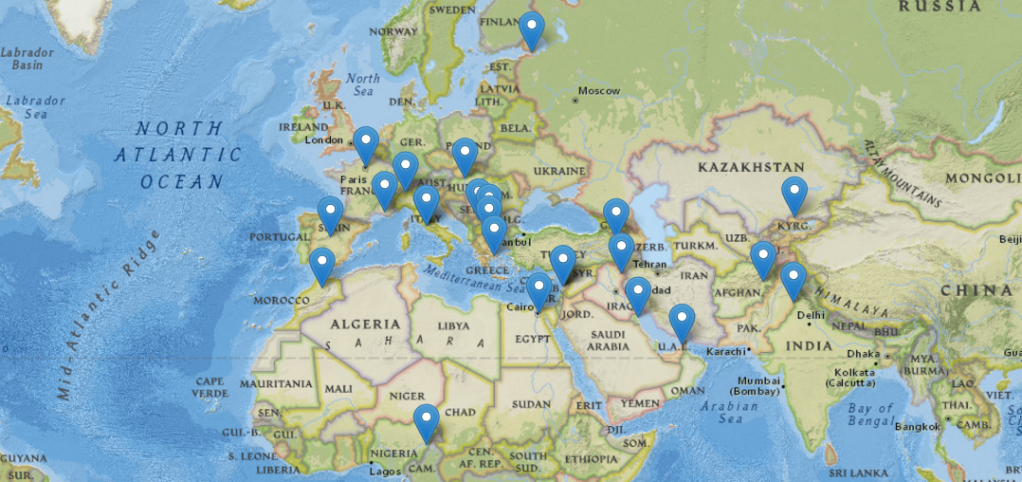
What’s different about running a first/freshman year experience (FYE) program as part of a liberal arts curriculum in the international environment of AMICAL member institutions? Different, for example, from running FYE programs at colleges or universities in the US? How do differences of language and culture, or the extreme diversity of these within some AMICAL institutions’ own student bodies, affect goals and expectations for these programs? How is information literacy integrated into these programs’ curricular goals, and how should this be done differently from American institutions, because of the diversity of students’ prior experiences with libraries and research, or with consuming and producing information?
I met today over lunch with Elizabeth Kinne, a medievalist in the Comparative Literature department of the American University of Paris (AUP), to talk about how we could discuss those questions across the AMICAL Consortium with faculty, librarians and others involved in FYE programs.
Elizabeth is the current coordinator for FirstBridge, an innovative FYE program initiated at AUP in 2001. FirstBridge creates small Freshman learning communities around paired and ‘bridged’ courses of different disciplines: students participate in the 2 separate courses but also meet regularly with both of their professors — and occasionally their librarian — for a joint ‘reflective seminar’ to work on interdisciplinary questions, information literacy, or various issues of crossing the bridge into their college careers.
At AUP, Elizabeth and colleagues are in the process of rethinking the goals and format of FirstBridge, so it’s a perfect time to be in contact with peers coordinating FYE programs at other AMICAL institutions. And an opportunity to start building a peer network across AMICAL focused on this special kind of curricular program. Our initial goal is to launch an online conversation with those coordinators, but we’re hoping to do much more!
We’ll be getting in touch soon with AMICAL members to find out more about FYE programs on your campuses, and who’s involved in them. If you’re an AMICAL member, and you simply can’t wait for that questionnaire to come your way, you can also send us a note with a link to info about the FYE program at your institution.
Jeff Gima ·
8 February 2016
Make AMICAL 2016 amazing. Contribute to the program.
Librarians, technologists, and faculty at AMICAL institutions: AMICAL 2016 is your conference. Below is the short version of “how to make it your conference” by proposing sessions for the program. There’s also a painfully-long Call for Proposals — which, in all seriousness, you need to read if you’re preparing a proposal — but here’s the basic idea:
You’ve got a vision. Propose a collaborative project planning session.You’re awesome at something. Help others learn a new skill or technique with a workshop.You’ve figured something really useful out. Present what you’ve learned from successes, from failures, and from challenges you’ve been facing.You’ve got problems. Ask for help from your colleagues, framing the question and discussion so that everyone gains by participating.
What topics can I propose?
We invite you to help us explore the theme of “Digital initiatives and libraries” by contributing a session related to this. You are also welcome to focus on any topic that’s current and relevant to AMICAL’s mission, in particular topics that relate to:
AMICAL’s committee areas (Note: all committees will also be holding meetings about their ongoing consortial projects)
priority areas for AMICAL’s 2015-2018 Mellon Foundation grant:
Leadership of Library and Information Services in Liberal Arts Environments
Information Literacy as a Liberal Art
Curriculum-Integrated Digital Initiatives
Growing the AMICAL Collaboration Network
What session formats can I use?
We’ve reworked our session formats this year to make them as participative as possible:
Community Idea Exchange (posters & tech showcases)
Birds of a Feather (guided discussion)
Mini-Workshops
Lightning Talks
Project Meetings
Panel Presentations
There are some changes even to formats we’ve used in previous years, so find out more and propose your session — by 21 February at the latest.
The AMICAL Conference works because members seek to share with and learn from each other. Add your bit of wisdom or inquisitiveness to the program!
Jeff Gima ·
4 February 2016
Just launched: AMICAL 2016 website and Call for Proposals

Libraries, scholarship and pedagogy are all becoming increasingly digital, even — at a slower but increasing pace — in the humanities. How can libraries partner with instructional designers and faculty to
use digital tools and methods for humanities scholarship?
thoughtfully incorporate digital tools and resources into teaching?
develop digital collections that serve, and perhaps arise from, student’s learning and research?
What are the specific challenges — and opportunities — of collaborating on these digital initiatives in AMICAL members’ international-American educational environments?
AMICAL 2016: “Libraries and digital initiatives”
Join us 12-14 May as we confront these questions at the 2016 AMICAL Annual Meeting & Conference.
Invited speakers will inspire and provoke us:
Laurie Allen (Assistant Director for Digital Scholarship, University of Pennsylvania)
Jim Groom (Co-founder, Reclaim Hosting)
Eric Lease-Morgan (Digital Initiatives Librarian, University of Notre Dame)
And AMICAL members will share their own expertise and questions, as we grapple with digital initiatives and other issues shared across our consortium.
How can I participate?
Attend. Faculty and staff at AMICAL member institutions are eligible to attend the conference in person. Anyone is welcome to attend online the keynotes and other live-streamed sessions. Find out more about how to attend, and note that registration opens 4 March, via the AMICAL 2016 website, for in-person attendance.
Propose a session. AMICAL members are encouraged to propose a session for the conference program (deadline: 21 February).